
Microdosing for Anxiety and Depression: The Wandering Spore Guide
An honest, safety-first guide to microdosing mushrooms for anxiety, depression, and depletion, including what to know if you're already on antidepressants or running on empty.
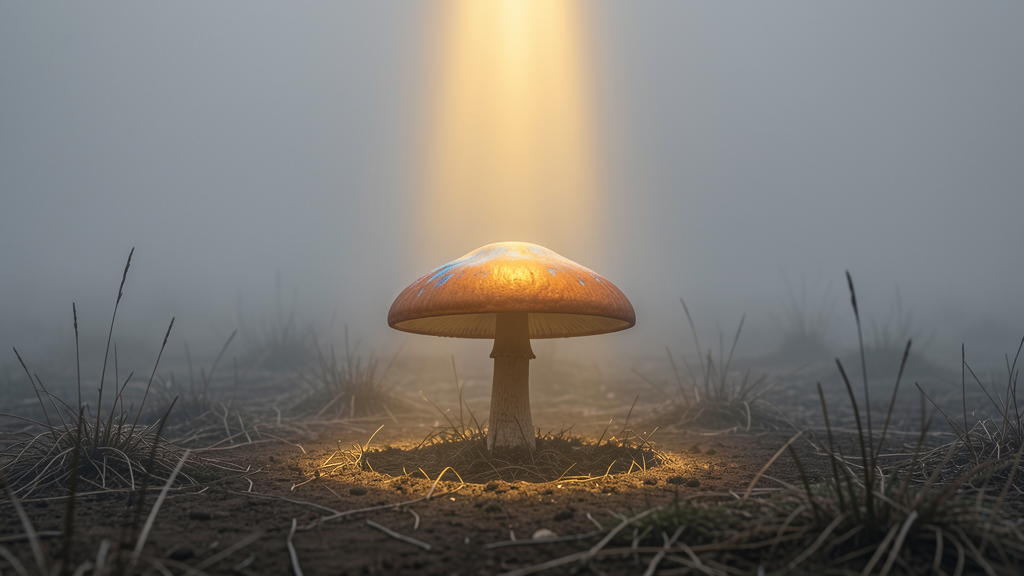
You don’t feel broken. You feel buried.
Five years on Lexapro and the volume on everything is turned down. Or you’re a parent who hasn’t had a thought that wasn’t about somebody else since 2019. Or there’s a low static of dread that doesn’t point at anything in particular, and you’ve stopped trying to explain it because the explanations all sound the same.
Microdosing mushrooms for anxiety and depression is a real practice with real evidence behind it. It is not a miracle and it is not a replacement for medical care. It is a tool people use, deliberately, to start hearing themselves again.
This article covers the basics, the science, the protocols, and the safety questions you need answered if you’re already on antidepressants. None of it is medical advice. If you’re on a prescription, talk to a practitioner who understands both pharmacology and psychedelics before you change anything.
What is microdosing, exactly?
A microdose is 0.1 to 0.3 grams of dried psilocybin mushrooms, between one-tenth and one-twentieth of a recreational dose. You take it on a schedule with rest days built in. You do not take it daily.
You will not feel high. If you do, you took too much. The point is closer to the opposite of getting high: feeling normal, but with the wiring slightly looser.
People who microdose for depression usually describe the first noticeable change as small. A morning where they got out of bed without bargaining with themselves. A meal they actually tasted. An afternoon where the inner loops went quiet for an hour.
How does psilocybin actually work in the brain?
Psilocybin converts in your gut into psilocin, which binds to the 5-HT2A serotonin receptor. SSRIs touch the same system but the mechanism is completely different. SSRIs raise baseline serotonin levels gradually, over weeks. Psilocin briefly amplifies receptor activity in a way that increases neuroplasticity, your brain’s ability to form new connections, for hours to days at a time.
The other piece is the Default Mode Network. The DMN is the brain system that runs your internal narrator: the voice rehashing yesterday’s argument and rehearsing tomorrow’s. In people with depression, the DMN is hyperactive. Imaging studies from Imperial College London have shown psilocybin temporarily reduces DMN activity. People describe it as the noise turning off.
Related science:
Is it safe to microdose mushrooms while on antidepressants?
Probably not in any straightforward way. Here’s the breakdown.
- SSRIs (Lexapro, Zoloft, Prozac, Celexa). SSRIs and psilocin compete for the same receptor. Most people on SSRIs feel nothing from a microdose because the SSRI is already occupying the parking spot. The combination is generally safe at microdose levels and also generally pointless.
- SNRIs (Effexor, Cymbalta). Same pattern as SSRIs.
- MAOIs (Nardil, Parnate). Do not combine. The interaction is well-documented and dangerous. See serotonin syndrome and psychedelics for what to watch for.
- Tricyclics. Not advised.
- Wellbutrin (bupropion). Different mechanism, fewer interactions, but still worth a conversation with someone who knows the territory.
If you want to try microdosing while currently on an antidepressant, the only sane path is to work with a doctor who can taper you safely. Never quit an SSRI cold. The discontinuation symptoms can be brutal and they are not the conditions in which to start a healing practice.
If you’re not ready to stop your medication, that is also a real answer. Microdosing is not going to disappear by next year.
What’s a beginner-friendly protocol for anxiety and depression?
Two protocols. Pick the one that fits the life you actually live.
The Fadiman Protocol (daytime)
Developed by Dr. James Fadiman, who has been collecting microdosing reports from volunteers since the 1960s.
- Day 1: 0.1g
- Day 2: off
- Day 3: off
- Day 4: 0.1g
- Repeat for 4-6 weeks, then take a full 2 weeks off
The two off-days are not arbitrary. Tolerance to psilocin builds fast and clears slowly, so dosing closer together produces diminishing returns. The off-days are also where integration happens, where you actually notice what shifted.
Start at 0.1 grams. Not 0.15. Not 0.2. The most common beginner mistake is starting higher because day one was uneventful. Day one being uneventful is the norm.
The Evening Protocol
If your day is full of other people’s needs, the Fadiman timing doesn’t fit. The Evening Protocol moves the dose to early evening, after dinner, before wind-down.
- Night 1: 0.1g
- Night 2: off
- Night 3: 0.1g
- Night 4: off
- Repeat for 4-6 weeks, then 2 weeks off
The evening schedule suits people whose only window of unstructured time is after the kids are asleep. The dose pairs naturally with journaling, sleep, and dreaming. Some people report unusually vivid dreams on dose nights, raw material if you keep a dream log.
What does the first 30 days actually feel like?
Most people don’t feel much in the first week. This is the most important sentence in this article and the one most beginners ignore.
Week 1. Slightly better sleep, maybe. A softer landing in the morning, maybe. Possibly nothing at all. Do not raise the dose.
Week 2. Patterns become easier to spot. Less reactivity to small annoyances. The sensation of being in the room instead of behind a window. People coming off long-term SSRI use sometimes report their first authentic emotional reaction in years, and it’s often grief or anger, not joy.
Weeks 3-4. Integration starts mattering more than the dose. You’ll start noticing the loops you live inside. The microdose does not dissolve the loops. It gives you enough distance to see them. What you do with that distance is the entire game.
The 2-week pause. Take it. The nervous system needs the gap. Skipping it is the second most common beginner mistake.
Common mistakes for someone in your position
If the opening of this article landed for you (burned out, depleted, on meds or off them, tired of holding the shape together) these are the traps to know about.
- Treating it like another pill. Microdosing is not “take one daily and feel better.” If you approach it that way you will be disappointed and you will take too much.
- Climbing the dose too fast. Going from 0.1g to 0.3g in week two because day one was quiet is almost universal among beginners. Resist it. Subtle is the entire point.
- Skipping the journaling. Microdosing without integration is recreational psilocybin with extra steps. The journal is not optional.
- Doing it in isolation. Microdosing tends to surface emotions you’ve been pressing down for years. Have a friend, a therapist, or a community to talk to before that surfacing happens.
- Expecting it to fix you. Microdosing is a catalyst, not a crutch.
A simple integration practice
Integration is what makes the lessons stick. Without it, microdosing is a hobby.
- Morning. On dose days, before you take the dose, write one sentence about what you want to be present to today. One sentence. Not a goal.
- Evening. Five minutes before bed. What did I notice? What surprised me? Skip the inspirational language and write what actually happened.
- Weekly. Read back through the week’s notes. Look for repeats. Repeats are the data.
- Body check-ins. Several times a day, pause and ask what your body needs. Sleep, water, food, movement, stillness. Then do the thing.
When you should reach out for support
- You’re on antidepressants and want guidance on a taper before starting.
- You started microdosing and old material is surfacing faster than you can process it.
- You are in active crisis or having suicidal thoughts. Microdosing is not a crisis intervention. Call a crisis line first.
- You or your immediate family have a history of psychosis or schizophrenia. This requires careful screening before any psychedelic use.
Frequently Asked Questions
Can I microdose mushrooms while on Lexapro or other SSRIs?
Most people on SSRIs feel nothing from a microdose because both compounds compete for the same serotonin receptor. The combination is usually pointless rather than dangerous, but the safest approach is to work with a doctor on a taper before you begin.
How much is a microdose of mushrooms in grams?
0.1 to 0.3 grams of dried psilocybin mushrooms. Beginners with anxiety should start at 0.1g and stay there for at least two weeks before considering any adjustment.
How long does a microdose of mushrooms last?
Direct effects last 4-6 hours. The integration window (when the experience is still working on you) extends another 24-48 hours. That’s why protocols include rest days.
Does microdosing actually help depression?
Early research and a large body of personal reports suggest it can, particularly for treatment-resistant depression and the emotional flatness common in long-term SSRI users. The data is still preliminary. Microdosing is not FDA-approved and no responsible practitioner would call it a guarantee.
Will I feel high or hallucinate on a microdose?
No. If you do, you took too much. Drop the dose next time.
Where to go from here
- Take the quiz: What kind of microdoser are you?
- Why You Feel Numb on Antidepressants, the longer science read
- Apply to join the community
- All microdosing protocols
Sources & Further Reading
The references below link to our science library, where each concept is broken down in depth and traced back to the original peer-reviewed research.
- Default Mode Network and psilocybin, built from imaging studies by Carhart-Harris and colleagues at Imperial College London
- Psilocybin and neuroplasticity, what the rodent and human research actually shows
- The 5-HT2A serotonin receptor, how psilocin and SSRIs interact with the same target
- SSRIs and psilocybin: combination, risks, and tapering
- James Fadiman and the modern microdosing protocol
- Serotonin syndrome and psychedelics
- Psilocybin vs psilocin: how the body converts one to the other
The Microdose Movement is an educational community, not a medical provider. Nothing in this article is medical advice. If you are in crisis, contact your local emergency services or a crisis helpline.
